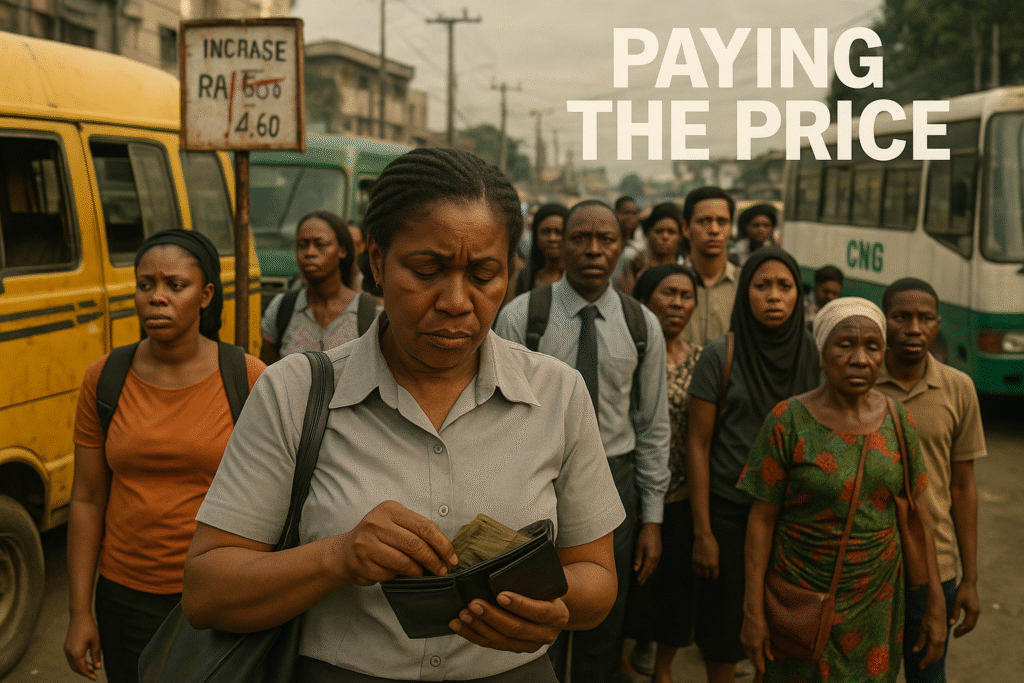
Small Business Owners Caught in the CNG Crossfire
Introduction
When Amina Hassan inherited her late husband’s transport business in Kano, she never imagined she would face a choice between government policy compliance and business survival. Her fleet of twelve buses, built over fifteen years of careful investment, now represents both an asset and a liability in Nigeria’s CNG transition era.
“The government says CNG will help our business, but they don’t understand what it means to convert twelve vehicles at once,” Amina explains, echoing concerns shared by thousands of small transport business owners across Nigeria. These entrepreneurs, who form the backbone of Nigeria’s informal transport sector, find themselves navigating uncharted waters as the Presidential CNG Initiative reshapes their industry.
The Scale of Investment Challenge
Unlike individual drivers who face conversion costs for single vehicles, small business owners confront multiplication of every challenge. For Amina’s twelve-bus fleet, conversion costs could range from N3.6 million to N12 million, depending on government support availability. This represents a significant portion of many businesses’ total asset value.
The financial challenge extends beyond conversion costs. Business owners must consider the opportunity cost of taking multiple vehicles offline simultaneously, the risk of conversion failures, and the potential need for additional working capital during the transition period.
“I cannot convert all buses at once because I will lose income for weeks,” explains Emeka Okafor, who operates a transport business between Lagos and Ibadan. “But converting one by one means some vehicles run on petrol while others use CNG, creating operational complexity and maintenance challenges.”
Cash Flow and Working Capital Pressures
Small transport businesses typically operate on thin margins with limited cash reserves. The CNG transition creates immediate cash flow pressures that many businesses struggle to manage. Even with government financing schemes, businesses must navigate application processes, meet eligibility criteria, and manage repayment schedules.
The “Convert Now, Pay Later” program, while helpful, creates long-term financial obligations that concern business owners. Many worry about their ability to meet payment schedules if business conditions change or if CNG adoption doesn’t deliver promised savings.
“My business survives on daily cash flow,” notes Khadija Abdullahi, who operates a fleet of commercial tricycles in Abuja. “Any disruption to this flow affects my ability to pay drivers, maintain vehicles, and support my family. The conversion process creates too much uncertainty.”
Operational Disruption and Business Continuity
The conversion process itself poses significant operational challenges for small businesses. Unlike large corporations with backup fleets and professional management, small operators cannot easily absorb the disruption of vehicle downtime.
Many businesses depend on specific routes, regular customers, and established schedules. Taking vehicles offline for conversion risks losing customers to competitors, particularly those who delay conversion or operate in areas with limited CNG infrastructure.
“My customers expect reliable service,” explains Yusuf Garba, who operates a taxi business in Kaduna. “If I cannot provide vehicles because they are being converted, customers will find other options. Building back that customer base takes time and money.”
Insurance and Risk Management Concerns
Small business owners face unique insurance challenges related to CNG conversion. Traditional vehicle insurance may not adequately cover CNG systems, and specialized coverage often comes at higher premiums. For businesses operating multiple vehicles, these additional costs can significantly impact profitability.
The risk profile of CNG vehicles, while generally safe, differs from conventional vehicles. Business owners worry about liability issues, particularly if accidents involve CNG systems. The lack of local experience with CNG insurance claims creates uncertainty about coverage and claim processing.
“Insurance companies are still learning about CNG,” observes Hauwa Mohammed, who operates a transport business in Jos. “They either refuse coverage or charge very high premiums. For a small business, this additional cost can eliminate the fuel savings we expect from CNG.”
Maintenance and Technical Support Challenges
Small transport businesses typically rely on local mechanics and informal maintenance networks. The transition to CNG disrupts these established relationships and creates new technical support requirements.
Business owners worry about the availability and cost of CNG-trained technicians, specialized tools, and replacement parts. Unlike large fleet operators who can negotiate service contracts with specialized providers, small businesses may face higher per-unit maintenance costs.
“My regular mechanic has been servicing my vehicles for ten years,” explains Aliyu Bello, who operates buses in Maiduguri. “He knows every vehicle’s history and provides affordable service. Now I must find new mechanics who understand CNG, and they will charge much higher rates.”
Market Competition and Competitive Disadvantage
The staggered adoption of CNG creates competitive imbalances in the transport market. Businesses that convert early may face higher operational costs during the transition period, while those who delay conversion continue operating with familiar systems.
This dynamic is particularly challenging in competitive markets where price sensitivity is high. Businesses that invest in CNG conversion may struggle to recover costs if competitors maintain lower prices by avoiding conversion expenses.
“Some operators are waiting to see what happens before converting,” notes Grace Okonkwo, who operates a transport business in Enugu. “They continue with petrol while we bear the conversion costs. This creates unfair competition until everyone is forced to convert.”
Access to Government Support Programs
While government support programs exist, small business owners often struggle to access them effectively. Application processes may be complex, eligibility criteria unclear, and approval timelines uncertain. Many small operators lack the administrative capacity to navigate bureaucratic requirements.
The concentration of conversion centers in major cities also disadvantages businesses operating in smaller towns or rural areas. These operators may face additional costs and logistical challenges to access conversion services.
“The government talks about supporting small businesses, but the process is complicated,” explains Usman Usman, who operates tricycles in Sokoto. “We need simple, accessible programs that recognize our limitations and provide real support.”
Financial Planning and Business Model Adaptation
CNG adoption requires small business owners to reassess their business models and financial planning. The shift from daily fuel purchases to potentially different refueling patterns affects cash flow management and operational planning.
Some businesses may need to adjust route planning, pricing structures, and customer service approaches to accommodate CNG infrastructure limitations. These adaptations require business planning skills that many small operators may lack.
“Running a transport business is becoming more complex,” observes Ahmed Tijani, who operates buses in Ilorin. “We must now consider fuel infrastructure, conversion financing, specialized maintenance, and new regulations. Many of us started this business because it was simple and straightforward.”
Solutions and Adaptation Strategies
Despite challenges, many small business owners propose practical solutions for successful CNG transition. The most common suggestion is phased implementation that allows businesses to convert vehicles gradually while maintaining operational continuity.
Business owners advocate for simplified financing programs with flexible repayment terms aligned to transport business cash flows. They also suggest group conversion programs that allow multiple small operators to share costs and risks.
“We need programs designed for small businesses, not just individual drivers or large companies,” suggests Maryam Sani, who operates a transport cooperative in Zaria. “Group conversion, shared maintenance contracts, and collective purchasing power could help us manage the transition better.”
The Role of Business Associations and Cooperatives
Transport business associations and cooperatives play crucial roles in supporting small operators through the CNG transition. These organizations can facilitate group conversions, negotiate better rates with service providers, and provide collective advocacy for member interests.
Some associations have begun developing support programs, including technical training, business planning assistance, and group insurance schemes. These initiatives help small businesses access resources and expertise typically available only to larger operators.
Government Policy Recommendations
Small business owners suggest several policy modifications to better support their transition to CNG. These include simplified application processes, flexible financing terms, and recognition of the unique challenges faced by small operators.
Recommendations also include temporary support measures during the transition period, such as tax incentives, reduced registration fees, and priority access to conversion services. Some suggest creating specialized support programs for women-owned and youth-operated transport businesses.
Long-term Business Sustainability
While immediate challenges dominate current discussions, forward-thinking business owners also consider long-term sustainability. The potential for reduced fuel costs, improved environmental performance, and alignment with government policy could provide competitive advantages over time.
Success requires careful planning, adequate support, and realistic expectations about transition timelines and costs. Business owners who can successfully navigate the conversion process may find themselves better positioned for future growth and expansion.
Conclusion
Small transport business owners represent a critical component of Nigeria’s CNG transition success. Their concerns about investment costs, operational disruption, and business sustainability are legitimate and require targeted solutions. Government policies and support programs must recognize the unique challenges faced by small operators and provide appropriate assistance.
The transition to CNG offers opportunities for business improvement and cost reduction, but only if implemented with sensitivity to small business realities. Success depends on collaborative approaches that involve business owners in policy development and provide practical support for transition challenges.
As Nigeria continues its CNG initiative, the experiences and needs of small transport business owners must remain central to program design and implementation. Their success will largely determine whether the CNG transition achieves its goals of economic relief and energy transformation while maintaining the vibrant informal transport sector that serves millions of Nigerians daily.