
Ever wondered why some natural gas vehicles look different or have different ranges? It might come down to whether they run on CNG or LNG! As the world shifts toward cleaner energy alternatives, natural gas has emerged as a crucial bridge fuel in our transition away from traditional petroleum-based transportation. However, not all natural gas fuels are created equal, and understanding the distinction between Compressed Natural Gas (CNG) and Liquefied Natural Gas (LNG) is essential for anyone interested in alternative fuels, sustainable transportation, or energy policy.
Both CNG and LNG represent innovative approaches to harnessing the power of natural gas for transportation and industrial applications, but their fundamental differences in physical state, storage requirements, and practical applications make them suitable for entirely different use cases. This comprehensive guide will explore every aspect of these two natural gas fuel forms, helping you understand when and why each is used, and what the future holds for natural gas in our energy landscape.
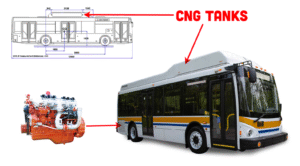
Understanding Natural Gas as a Transportation Fuel
Natural gas, primarily composed of methane (CH₄), has gained significant traction as an alternative transportation fuel due to its abundance, relatively clean burning characteristics, and cost advantages over traditional petroleum fuels. When burned, natural gas produces significantly fewer emissions than gasoline or diesel, including reduced carbon dioxide, nitrogen oxides, particulate matter, and virtually no sulfur compounds.
The appeal of natural gas extends beyond environmental benefits. North America’s shale gas revolution has created an abundant domestic supply, reducing dependence on imported oil and providing price stability for fleet operators and consumers. However, the challenge lies in efficiently storing and transporting natural gas, which in its standard state is a gas at atmospheric pressure and temperature.
This storage challenge has led to two primary solutions: compression and liquefaction. Each approach fundamentally alters the physical properties of natural gas, creating distinct fuel types with unique characteristics, infrastructure requirements, and optimal applications. Understanding these differences is crucial for making informed decisions about natural gas adoption in various transportation and industrial contexts.
What is Compressed Natural Gas (CNG)?
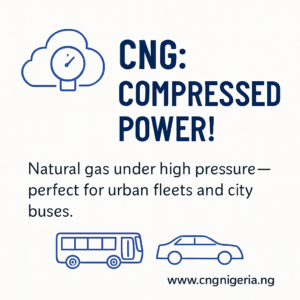
Compressed Natural Gas represents the more straightforward approach to natural gas storage and utilization. CNG is natural gas that has been compressed to a high pressure, typically between 200 and 248 bar (approximately 2,900 to 3,600 pounds per square inch), while maintaining its gaseous state. This compression process reduces the volume of natural gas to less than one percent of its volume at standard atmospheric pressure, making it practical for vehicle fuel tanks and transportation.
The compression process itself is relatively simple from a technological standpoint. Natural gas is fed into high-pressure compressors, which force the gas molecules closer together without changing the fundamental state of the material. The compressed gas is then stored in specially designed high-pressure vessels, typically made from steel, aluminum, or advanced composite materials capable of withstanding the significant internal pressure.
One of the key advantages of CNG is that it remains at ambient temperature throughout the compression and storage process. This means that CNG systems do not require specialized temperature control equipment, making the infrastructure requirements more straightforward and cost-effective compared to cryogenic alternatives. The ambient temperature storage also means that CNG can be handled using conventional safety equipment and procedures, though the high pressure does require specific safety protocols.
CNG refueling can occur through two primary methods: “quick fill” and “time fill.” Quick fill operations, similar to conventional gasoline refueling, can complete the process in three to ten minutes using high-pressure dispensers. Time fill operations, typically used for fleet vehicles returning to central depots overnight, slowly fill vehicles over several hours using lower-pressure systems that are more cost-effective for fleet operations.
The energy density of CNG, while significantly improved through compression, remains lower than liquid fuels. This limitation affects vehicle range and requires larger or multiple storage tanks to achieve comparable driving distances to conventional vehicles. However, for applications with predictable routes and regular return-to-base operations, this limitation is often acceptable given the cost and environmental benefits.
What is Liquefied Natural Gas (LNG)?
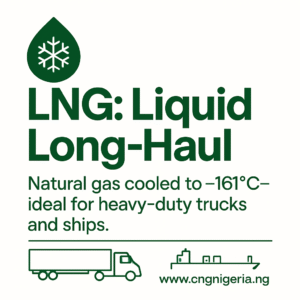
Liquefied Natural Gas represents a more complex but highly effective approach to natural gas storage and transportation. LNG is natural gas that has been cooled to approximately -161°C (-260°F) at atmospheric pressure, causing it to condense into a liquid state. This liquefaction process achieves a remarkable volume reduction of approximately 600 times compared to natural gas at standard temperature and pressure, making it extremely efficient for storage and long-distance transportation.
The liquefaction process requires sophisticated cryogenic technology. Natural gas must first be purified to remove impurities such as water, carbon dioxide, and sulfur compounds that would freeze and cause operational problems at cryogenic temperatures. The purified gas is then cooled through a series of heat exchangers and expansion processes until it reaches the liquefaction temperature. This process requires significant energy input, typically consuming 10-15% of the energy content of the natural gas being processed.
Storage of LNG requires specialized cryogenic tanks designed to maintain the extremely low temperature necessary to keep the natural gas in liquid form. These tanks feature multiple layers of insulation and are constructed from materials capable of withstanding cryogenic temperatures without becoming brittle. Despite excellent insulation, some heat transfer is inevitable, causing a small amount of LNG to vaporize over time in a process called “boil-off.” Modern LNG systems are designed to capture and utilize this boil-off gas rather than venting it to the atmosphere.
The handling of LNG requires specialized safety equipment and procedures due to the cryogenic temperatures involved. Personnel working with LNG must use cryogenic gloves, eye protection, and long-sleeved clothing to prevent cold burns. Refueling operations, while similar in duration to diesel refueling, require specialized cryogenic equipment and trained operators familiar with the unique safety considerations of handling super-cooled liquids.
The energy density advantage of LNG is substantial. The 600-fold volume reduction compared to natural gas at standard conditions, and the significant density advantage over CNG, makes LNG particularly attractive for applications requiring high energy storage in limited space. This characteristic makes LNG ideal for long-haul transportation, marine applications, and industrial processes requiring large quantities of natural gas.
Direct Comparison: CNG vs. LNG
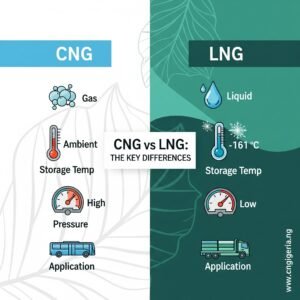
To fully understand the practical implications of choosing between CNG and LNG, a detailed comparison of their key characteristics is essential:
| FEATURE | CNG (Compressed Natural Gas) | LNG (Liquefied Natural Gas) |
|---|---|---|
| Physical State | Gas (highly compressed) | Liquid (cryogenic) |
| Storage Temperature | Ambient (-40°C to +85°C) | Cryogenic (-161°C/-260°F) |
| Storage Pressure | High (200-248 bar/2,900-3,600 psi) | Low (atmospheric to 10 bar) |
| Volume Reduction | ~200-250x from standard gas | ~600x from standard gas |
| Energy Density (by volume) | Lower (~25% of gasoline) | Higher (~60% of gasoline) |
| Storage Infrastructure | High-pressure steel/composite tanks | Insulated cryogenic tanks |
| Refueling Time | 3-10 minutes (quick fill) or hours (time fill) | 5-15 minutes (similar to diesel) |
| Range Capability | Shorter (100-400 km typical) | Longer (800-1,600 km typical) |
| Primary Applications | Urban buses, delivery trucks, passenger cars, fleet vehicles | Long-haul trucks, ships, industrial facilities, power generation |
| Infrastructure Complexity | Moderate (high-pressure systems) | High (cryogenic handling required) |
| Safety Considerations | High-pressure gas, rapid dispersion if leaked | Cryogenic burns, controlled evaporation |
| Cost per Energy Unit | Generally lower | Higher due to liquefaction costs |
| Distribution Method | Pipeline or compressed gas trailers | Specialized cryogenic tankers |
This comparison reveals that the choice between CNG and LNG is not simply a matter of preference, but rather depends heavily on the specific application, operational requirements, and infrastructure considerations of the intended use case.
Applications and Use Cases
CNG Applications: Urban and Regional Transportation
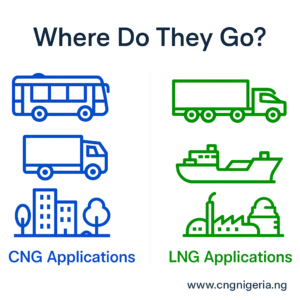
Compressed Natural Gas has found its primary niche in urban and regional transportation applications where vehicles operate on predictable routes and return to central fueling locations regularly. The most successful CNG applications include:
Public Transit Systems: City buses represent one of the most successful applications of CNG technology. Transit agencies worldwide have adopted CNG buses due to their environmental benefits, cost savings, and suitability for urban routes with regular return-to-depot operations. The predictable routes and centralized fueling infrastructure make CNG an ideal choice for public transportation fleets.
Delivery and Service Fleets: Package delivery companies, utility services, and municipal fleets have embraced CNG for vehicles that operate within defined geographic areas. These applications benefit from the lower fuel costs and reduced emissions while working within the range limitations of CNG systems.
Passenger Vehicles: In regions with developed CNG infrastructure, passenger cars and light trucks can effectively utilize CNG. Countries like Iran, Pakistan, and Argentina have extensive CNG networks supporting millions of passenger vehicles. However, the success of passenger CNG adoption depends heavily on government support and infrastructure development.
Refuse Collection: Garbage trucks and recycling vehicles are excellent candidates for CNG conversion due to their stop-and-go urban operation, regular routes, and return-to-base operations. The environmental benefits are particularly valuable in urban areas where air quality is a concern.
LNG Applications: Heavy-Duty and Long-Distance Transportation
Liquefied Natural Gas excels in applications requiring high energy density, long range, and heavy-duty performance:
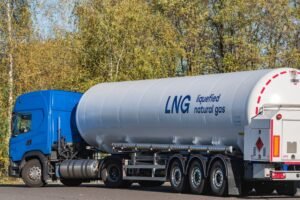
Long-Haul Trucking: The trucking industry has increasingly adopted LNG for long-distance freight transportation. LNG trucks can achieve ranges comparable to diesel vehicles while providing significant fuel cost savings and reduced emissions. The high energy density of LNG makes it practical for cross-country transportation where refueling opportunities may be limited.
Marine Transportation: The shipping industry has embraced LNG as a marine fuel, particularly following International Maritime Organization regulations requiring reduced sulfur emissions. LNG-powered ships can meet stringent environmental requirements while maintaining operational efficiency. The ability to store large quantities of fuel makes LNG ideal for ocean-going vessels.
Industrial Applications: Large industrial facilities use LNG as a feedstock for chemical processes, power generation, and heating applications. The ability to store and transport large quantities of natural gas in liquid form makes LNG practical for industrial sites not connected to natural gas pipelines.
Power Generation: LNG enables natural gas power generation in remote locations or areas without pipeline infrastructure. Mobile LNG systems can provide temporary or permanent power solutions for mining operations, emergency response, or grid support applications.
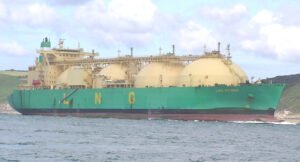
International Trade: LNG has revolutionized the global natural gas market by enabling intercontinental trade. Countries with abundant natural gas resources can export LNG to markets worldwide, providing energy security and economic benefits.
Infrastructure Requirements and Considerations
CNG Infrastructure
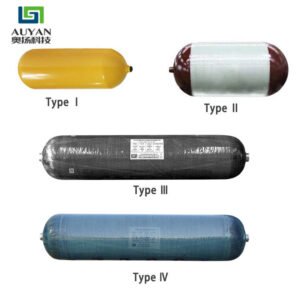
The infrastructure requirements for CNG are generally less complex than LNG but still require significant investment and planning:
Compression Stations: CNG requires high-pressure compression equipment capable of achieving 200-248 bar pressure. These stations can be connected to natural gas pipelines for continuous supply or supplied by compressed natural gas trailers for areas without pipeline access.
Storage Systems: High-pressure storage vessels at fueling stations must be designed and maintained according to strict safety standards. The storage capacity determines the number of vehicles that can be fueled before requiring replenishment.
Dispensing Equipment: CNG dispensers must handle high-pressure gas safely and efficiently. Quick-fill dispensers require more sophisticated equipment than time-fill systems but provide faster refueling for operational efficiency.
Vehicle Modifications: Converting conventional vehicles to CNG requires installing high-pressure fuel tanks, pressure regulators, and modified engine management systems. Purpose-built CNG vehicles are generally more efficient and reliable than conversions.
LNG Infrastructure

LNG infrastructure is more complex and capital-intensive due to the cryogenic nature of the fuel:
Liquefaction Facilities: Large-scale LNG production requires sophisticated liquefaction plants with significant capital investment. These facilities must be located near natural gas sources and have access to transportation infrastructure.
Cryogenic Storage: LNG storage requires specialized tanks designed to maintain cryogenic temperatures. These tanks must be constructed from materials suitable for low-temperature service and include sophisticated insulation systems.
Transportation Systems: LNG transportation requires specialized cryogenic tankers for road transport or purpose-built LNG carriers for marine transportation. These vehicles must maintain the cold chain throughout the transportation process.
Regasification Equipment: Many LNG applications require regasification equipment to convert LNG back to gaseous form for use in conventional natural gas applications.
Environmental Impact and Sustainability
Both CNG and LNG offer significant environmental advantages compared to conventional petroleum fuels, but their environmental profiles differ in important ways:
Emissions Reduction
Natural gas combustion produces fewer greenhouse gas emissions than gasoline or diesel fuel. CNG and LNG vehicles typically reduce carbon dioxide emissions by 15-25% compared to equivalent gasoline vehicles and 5-15% compared to diesel vehicles. The reduction in nitrogen oxides (NOx) is even more significant, with natural gas vehicles producing 50-80% fewer NOx emissions than diesel vehicles.
Particulate matter emissions are virtually eliminated with natural gas combustion, providing significant air quality benefits in urban areas. This characteristic makes natural gas vehicles particularly valuable for applications in densely populated areas where air quality is a concern.
Lifecycle Considerations
The environmental impact of CNG and LNG must be evaluated on a lifecycle basis, including extraction, processing, transportation, and combustion. Natural gas extraction through hydraulic fracturing (fracking) has raised environmental concerns, including potential groundwater contamination and induced seismicity.
Methane leakage throughout the natural gas supply chain can significantly impact the greenhouse gas benefits of natural gas. Methane is a potent greenhouse gas with a global warming potential approximately 25 times greater than carbon dioxide over a 100-year period. Minimizing methane leakage is crucial for maintaining the environmental advantages of natural gas fuels.
The energy-intensive liquefaction process for LNG reduces its overall energy efficiency compared to CNG. However, the improved transportation efficiency and broader application possibilities of LNG can offset this disadvantage in many use cases.
Economic Considerations
Cost Advantages
Natural gas has historically maintained a significant cost advantage over petroleum fuels, particularly in regions with abundant natural gas resources. This cost advantage has been a primary driver for natural gas vehicle adoption, especially in commercial and fleet applications where fuel costs represent a significant operational expense.
CNG typically offers greater cost savings than LNG due to the simpler processing requirements. However, the infrastructure investment required for CNG systems can be substantial, particularly for smaller fleets or individual vehicle owners.
LNG, while more expensive to produce due to liquefaction costs, offers economic advantages in applications requiring high energy density or long-distance transportation. The ability to transport natural gas to markets without pipeline infrastructure can provide significant economic value.
Infrastructure Investment
The economic viability of CNG and LNG systems depends heavily on infrastructure development and utilization rates. High-volume applications can justify the capital investment required for specialized infrastructure, while low-volume applications may struggle to achieve economic viability.
Government incentives and policies play a crucial role in the economic attractiveness of natural gas vehicles. Tax credits, grants, and regulatory requirements can significantly impact the economic comparison between natural gas and conventional fuels.
Future Outlook and Technological Developments
The future of CNG and LNG depends on several factors, including technological advancement, policy support, and competition from other alternative fuels:
Technological Improvements
Ongoing research and development efforts focus on improving the efficiency and reducing the costs of natural gas vehicle systems. Advanced materials for storage tanks, improved compression and liquefaction technologies, and enhanced engine designs continue to expand the capabilities and applications of natural gas fuels.
Renewable natural gas (RNG) production from organic waste sources offers the potential for carbon-neutral or even carbon-negative natural gas fuels. RNG can be used in existing CNG and LNG infrastructure, providing a pathway for further emissions reductions.
Market Competition
The natural gas vehicle market faces increasing competition from battery electric vehicles, hydrogen fuel cells, and advanced biofuels. The relative advantages of each technology depend on specific application requirements, infrastructure availability, and technological advancement rates.
Electric vehicles have gained significant momentum in passenger car applications, potentially limiting the growth of CNG in this market segment. However, natural gas maintains advantages in heavy-duty and long-distance applications where battery technology faces greater challenges.
Policy and Regulatory Environment
Government policies and regulations significantly influence the adoption of natural gas vehicles. Emissions regulations, fuel economy standards, and infrastructure investment programs can accelerate or hinder natural gas vehicle deployment.
International climate commitments and carbon pricing mechanisms may favor natural gas as a bridge fuel in the transition to renewable energy systems. However, long-term climate goals may ultimately favor zero-emission technologies over natural gas.
Conclusion
The distinction between CNG and LNG represents more than just different physical states of the same fuel – it reflects fundamentally different approaches to harnessing natural gas for transportation and industrial applications. CNG, with its simpler infrastructure requirements and ambient temperature storage, excels in urban and regional applications where vehicles operate on predictable routes and return to central fueling locations. LNG, despite its complexity and higher costs, provides the energy density and range capabilities necessary for heavy-duty and long-distance applications.
The choice between CNG and LNG should be based on careful consideration of operational requirements, infrastructure availability, economic factors, and environmental goals. Both technologies offer significant advantages over conventional petroleum fuels and will likely play important roles in the transition to cleaner transportation systems.
As the energy landscape continues to evolve, natural gas fuels face both opportunities and challenges. Technological improvements, policy support, and market dynamics will determine the future role of CNG and LNG in our transportation and energy systems. Understanding these technologies and their appropriate applications is essential for making informed decisions about sustainable transportation and energy policy.
The success of natural gas as a transportation fuel ultimately depends on continued innovation, infrastructure development, and supportive policies that recognize the unique advantages of both CNG and LNG in their respective applications. As we work toward a more sustainable energy future, both forms of natural gas fuel will likely continue to serve as important bridges to even cleaner technologies while providing immediate environmental and economic benefits.
This comprehensive guide provides the foundation for understanding CNG and LNG technologies. For the latest developments and specific application guidance, consult with natural gas industry experts and stay informed about technological and policy developments in the alternative fuels sector.
Author: Sopiriye Fiberesima